
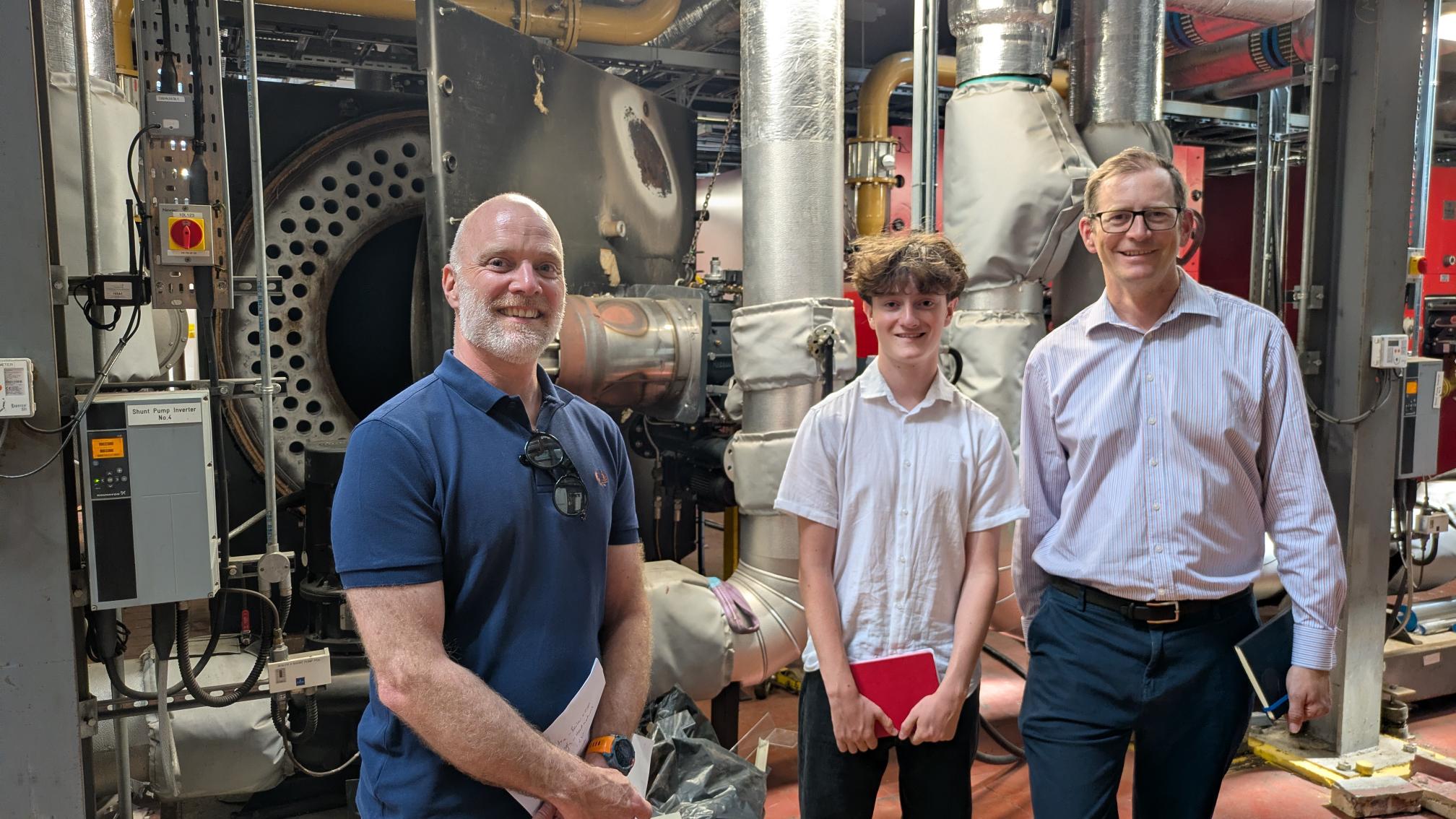
Last month, Optimal Monitoring attended the Decarbonising the NHS conference in London.
The event brought together NHS estates, sustainability and energy teams to discuss how healthcare organisations can reduce carbon emissions while maintaining safe, reliable and efficient environments for patients and staff.
A clear theme from the day was that NHS teams do not just need more data. They need clear, practical insight that helps them take action.
Questions We Heard on the Stand…
Why is energy management so challenging for the NHS?
NHS estates are complex. Acute hospitals, community sites, health centres and offices all have different operating patterns, building types and energy demands.
Many sites run 24/7 and rely on critical systems such as heating, ventilation, cooling, CHP, medical equipment, BMS controls and backup infrastructure. This makes energy reduction more challenging, because changes must support efficiency without affecting patient care or operational resilience.
Where can Emma AI help?
Emma AI helps NHS estates and sustainability teams understand how energy is being used across their buildings. It automatically analyses consumption data, identifies unusual patterns and highlights where avoidable waste may be occurring.
This can include out-of-hours consumption, abnormal baseloads, plant running unnecessarily, poor scheduling, inefficient controls or unexpected changes in demand.
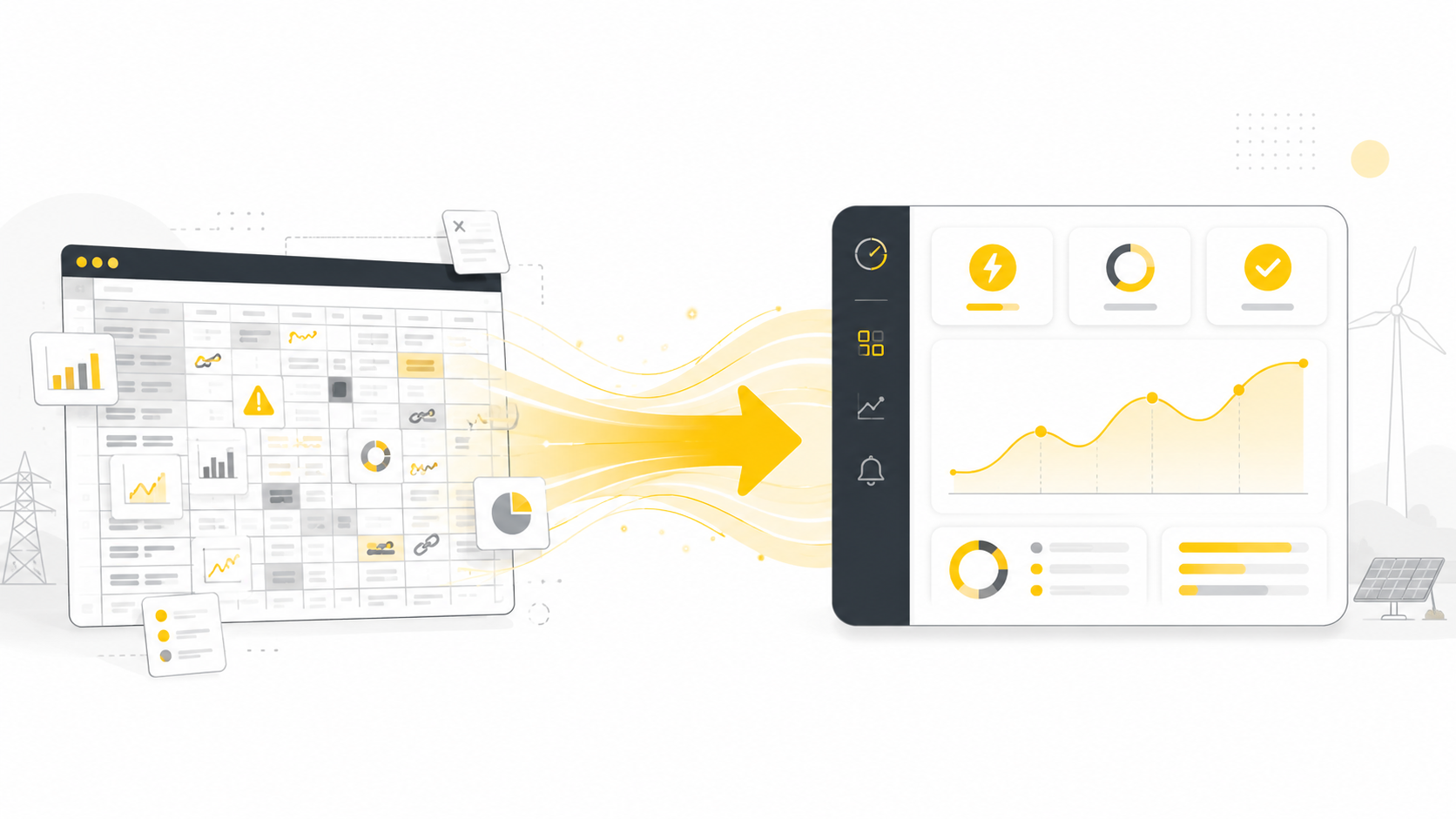
Rather than relying on manual spreadsheets or delayed reports, Emma AI turns energy data into prioritised actions.
Can Emma AI work in acute hospital settings where CHP and other large systems are involved?
Yes. Emma AI can support complex acute hospital environments by analysing energy patterns across large systems such as CHP, boilers, chillers and wider plant.
The key is connecting the right data sources so the platform can identify unusual consumption, avoidable waste and opportunities for optimisation without disrupting critical healthcare operations.
We are from a community health trust. Will Emma AI work across all sites?
Yes. EMMA AI is designed for multi-site estates, making it well suited to community health trusts with clinics, offices, health centres and community hospitals.
It helps estates and sustainability teams compare performance across sites, identify which buildings need attention and focus resources where they can have the greatest impact.
Considering we are an NHS trust, where does the data come from?
Data can come from existing NHS energy sources, including fiscal meters, half-hourly electricity data, gas and water meters, AMR devices, sub-metering, BMS systems, supplier data and third-party integrations.
EMMA AI brings this data together and turns it into clear, practical insight for estates, sustainability and energy teams.
What about BMS data? The majority of our hospitals are BMS controlled.
BMS data can be integrated where available and can add valuable context around plant schedules, controls and building operation.
This can help EMMA AI identify issues such as equipment running unnecessarily, unusual control patterns, inefficient scheduling or buildings not operating as expected.
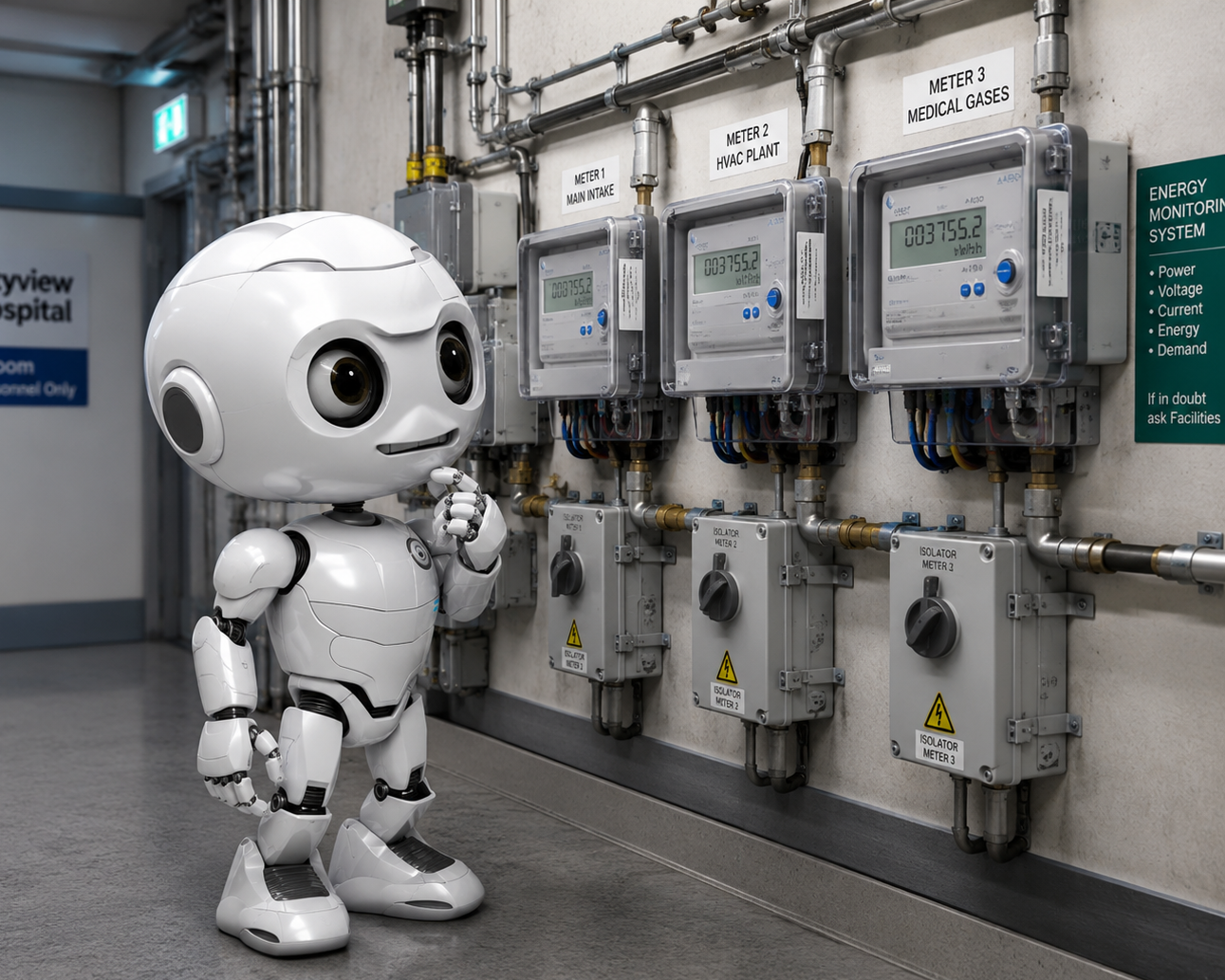
What if we do not have gas meters at a per-building level?
This is common across NHS estates, especially on older or more complex sites.
Emma AI can still work with the data currently available, while Optimal Monitoring can review existing metering and advise where additional gas sub-metering would add the most value. This allows trusts to improve visibility in stages rather than needing everything in place from day one.
We have a lot of solar on acute units and offsite. How is that accounted for?
The electricity meter has changed significantly since the first mechanical models were developed in the late nineteenth century. What began as a relatively simple device for measuring electricity consumption has gradually evolved into digital technology capable of recording, communicating and analysing detailed energy data.
Each stage of this development has helped make energy measurement more accurate, efficient and convenient. Modern smart meters not only improve the way readings are collected and bills are calculated, but also give households, businesses and energy suppliers greater visibility of consumption. As energy systems continue to develop, metering technology is likely to play an increasingly important role in helping people manage energy more effectively and supporting the UK’s transition towards a smarter and more sustainable future.
We are tasked with improving “digital maturity” within the Trust. Can this help?
The electricity meter has changed significantly since the first mechanical models were developed in the late nineteenth century. What began as a relatively simple device for measuring electricity consumption has gradually evolved into digital technology capable of recording, communicating and analysing detailed energy data.
Each stage of this development has helped make energy measurement more accurate, efficient and convenient. Modern smart meters not only improve the way readings are collected and bills are calculated, but also give households, businesses and energy suppliers greater visibility of consumption. As energy systems continue to develop, metering technology is likely to play an increasingly important role in helping people manage energy more effectively and supporting the UK’s transition towards a smarter and more sustainable future.
What was our key takeaway from the conference?
The NHS already has strong ambitions around net zero, but delivery depends on practical, measurable action.
For estates teams, that means having the right insight at the right time. EMMA AI helps turn complex energy data into clear actions, supporting lower costs, reduced carbon emissions and more efficient healthcare environments.
References
Department for Energy Security and Net Zero (2025) Smart meters: your rights and expectations. Available at: https://www.gov.uk/government/publications/smart-meters-your-rights-and-expectations/smart-meters-your-rights-and-expectations (Accessed: 3 July 2026).
National Institute of Standards and Technology (NIST) (n.d.) Advanced metering in smart distribution grids. Available at: https://www.nist.gov/programs-projects/advanced-metering-smart-distribution-grids (Accessed: 3 July 2026).
Reallin (n.d.) The 100-year evolutionary history of four generations of electricity meters. Available at: https://www.reallin.com/news/the-100-year-evolutionary-history-of-four-gene-85422835.html (Accessed: 3 July 2026).
Wikipedia (n.d.) Automatic meter reading. Available at: https://en.wikipedia.org/wiki/Automatic_meter_reading (Accessed: 3 July 2026).
Wikipedia (n.d.) Theodore Paraskevakos. Available at: https://en.wikipedia.org/wiki/Theodore_Paraskevakos (Accessed: 3 July 2026).

Find out more
EMMA AI is a unique Artificial Intelligence (AI) platform that measures energy consumption across your individual sites, pinpointing exactly where money is being wasted and taking proactive measures to reduce the waste – all without having to install a single piece of equipment!