

Introduction
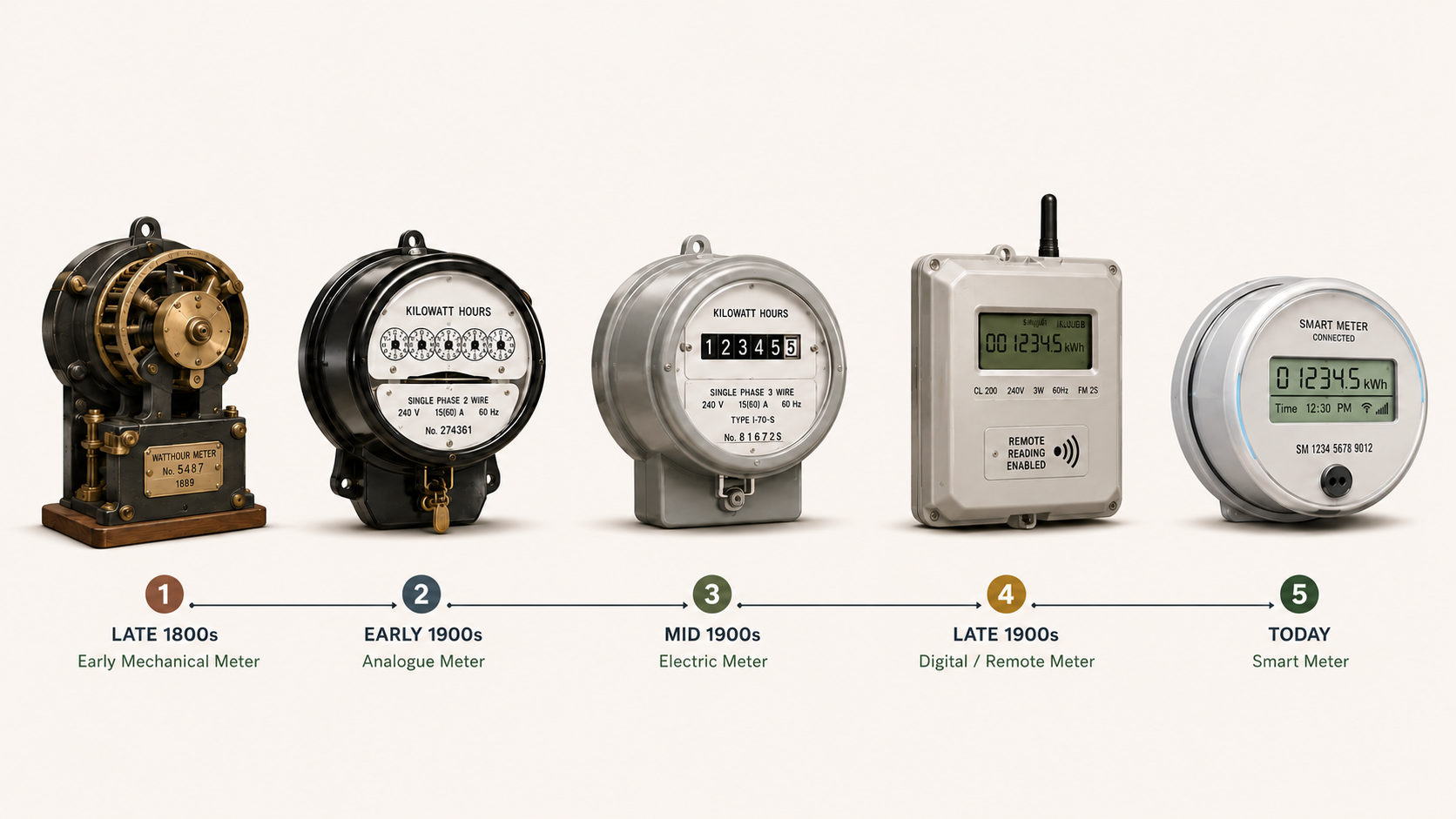
Electricity meters have played an essential role in measuring and managing energy use for more than a century. From the first mechanical induction meter developed in the late nineteenth century to today’s connected smart meters, the technology has continually evolved to become more accurate, efficient and intelligent. This article explores the history of the electricity meter, the key developments that shaped it, and how modern smart meters are changing the way energy consumption is monitored.
What is an electricity meter?
An electricity meter is a device used which measures the energy consumption of homes and businesses over a period of time.
It has become a vital tool for electricity suppliers, who use it to calculate customers’ consumption and subsequent bills.
How does this differ from the modern-day smart meter?
According to the National Institute of Standards and Technology (NIST), a smart meter is an advanced metering device that measures energy consumption digitally and automatically communicates data between the meter and the utility provider (the organisation that manages and owns the metering infrastructure).
Compared to traditional electricity meters, smart meters make the process more efficient, accurate and reliable because readings are collected and transmitted automatically, reducing the risk of estimated bills and human error.
Technological changes to the meter over time
The first electricity meter was created in 1889, a German inventor named Blathy invented the world’s first induction-type mechanical electricity meter, laying down the blueprint for future electricity metering.
The structure of this meter consisted of two coils with iron cores and a disc made from aluminium mounted on a rotating shaft. These coils generated a magnetic field, driving the disc to rotate. Next, a transmission mechanism then drove a dial to count, measuring the electricity consumption in the building.
Blathy’s model held many advantages such as safe operation, affordable pricing, durability, and the ability to be mass produced. Due to these numerous benefits, the model was widely adopted and became the dominant type of electricity meter for almost a century.
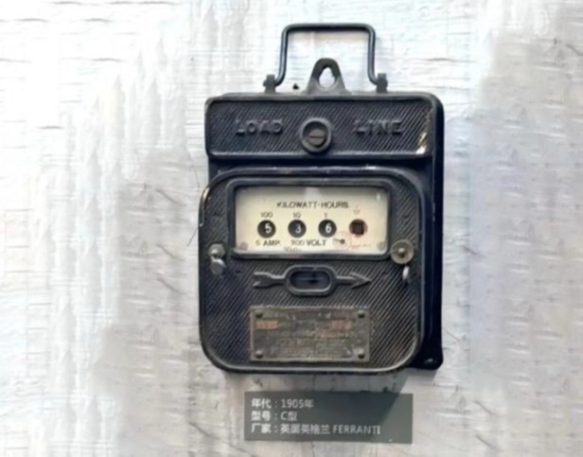
Zhejiang Reallin Electron Co., Ltd. The 100-Year Evolutionary History of Four Generations of Electricity Meters, 30 Jan. 2026. Accessed 30 June 2026.
The first smart meter
With regards to the smart meter, there is no single, widely recognised inventor, due to the evolving nature of technology overtime, and the persistent developments to the electricity meter models.
However, in 1972, a man named Theodore Paraskevakos developed a digital remote monitoring system capable of transmitting utility meter readings over telephone lines. One of Paraskevakos’ companies, Metretek, helped to commercialise his technology in 1977, establishing the foundation for modern day smart meters.
In the 1970s however, prior to the technological advancements of the modern day, smart meters were typically found in larger corporations as opposed to households. It was only in the late 2000s that meters into the home became widely available to the public.
More on smart meters
From 2009 onward, smart meters have gradually replaced traditional electricity meters. As previously mentioned, this is due to developments in the technology as well as declining costs of producing smart meters since the 1970s.
In the UK, smart meters form part of a major programme to modernise the country’s energy infrastructure. They are gradually replacing traditional analogue meters in homes and small businesses across Great Britain, automatically recording consumption and sending readings securely to energy suppliers. This reduces the need for manual readings and allows bills to be based on actual rather than estimated energy use.
Smart meters can also provide consumers with almost real-time information, helping them understand when and how they use energy. More widely, access to detailed consumption data supports flexible tariffs and helps the energy system balance supply and demand more effectively. So, smart meters are an important part of the transition towards a more efficient, flexible and lower-carbon energy network.
Conclusion
The electricity meter has changed significantly since the first mechanical models were developed in the late nineteenth century. What began as a relatively simple device for measuring electricity consumption has gradually evolved into digital technology capable of recording, communicating and analysing detailed energy data.
Each stage of this development has helped make energy measurement more accurate, efficient and convenient. Modern smart meters not only improve the way readings are collected and bills are calculated, but also give households, businesses and energy suppliers greater visibility of consumption. As energy systems continue to develop, metering technology is likely to play an increasingly important role in helping people manage energy more effectively and supporting the UK’s transition towards a smarter and more sustainable future.
References
Department for Energy Security and Net Zero (2025) Smart meters: your rights and expectations. Available at: https://www.gov.uk/government/publications/smart-meters-your-rights-and-expectations/smart-meters-your-rights-and-expectations (Accessed: 3 July 2026).
National Institute of Standards and Technology (NIST) (n.d.) Advanced metering in smart distribution grids. Available at: https://www.nist.gov/programs-projects/advanced-metering-smart-distribution-grids (Accessed: 3 July 2026).
Reallin (n.d.) The 100-year evolutionary history of four generations of electricity meters. Available at: https://www.reallin.com/news/the-100-year-evolutionary-history-of-four-gene-85422835.html (Accessed: 3 July 2026).
Wikipedia (n.d.) Automatic meter reading. Available at: https://en.wikipedia.org/wiki/Automatic_meter_reading (Accessed: 3 July 2026).
Wikipedia (n.d.) Theodore Paraskevakos. Available at: https://en.wikipedia.org/wiki/Theodore_Paraskevakos (Accessed: 3 July 2026).
Find out more
EMMA AI is a unique Artificial Intelligence (AI) platform that measures energy consumption across your individual sites, pinpointing exactly where money is being wasted and taking proactive measures to reduce the waste – all without having to install a single piece of equipment!